
By Molly Seghi
As the sun dances toward the horizon, my fingers race across the keyboard more vigorously. I glance out the library window, noticing how the blue hues of the sky gradually evolve into pinks and oranges. Ten more minutes until Shabbat, I think. Just enough time to finish a week’s work before my laptop is forced shut, as if an exam proctor were to yank a test from my hands.
Work can feel ceaseless. After leaving the classroom, there is homework; after leaving the office, there are tasks and emails. Theoretically, there is always more to achieve—a capitalist notion that has morphed into a sense of obligation. The only undertaking more alluring, and arguably more difficult, than the rat race of life is the biblical responsibility to withdraw from it, entering the enhanced state of awareness that comes with the observance of Shabbat.
Long ago, life’s purpose was survival. In the modern Western world, where basic needs are largely assured, the question of life’s meaning has shifted to a higher yet often vaguer plane of existence, whether defined as success, happiness or fulfillment. Shabbat proposes an active pause from striving for these amorphous goals, which are necessary both in the fast-paced society of the 21st century and in the capitalist work culture of America.
Shabbat is a 25-hour Jewish day of rest, beginning at sunset on Friday and ending at nightfall on Saturday. It is the fourth of the Ten Commandments: “remember the Sabbath day, to keep it holy,” standing alongside commandments forbidding adultery and idolatry. Its purpose, the Bible explains, dates to the dawn of humanity, when God rested on the seventh day of creation. Shabbat-observant Jews mirror this divine rest by refraining from the 39 melachot, categories of work, as Rabbinically derived from the Bible, that represent human control over nature, including writing, building and sowing. While these forbidden labors may seem antiquated, their implications today are far-reaching, banning even the flick of a light switch.
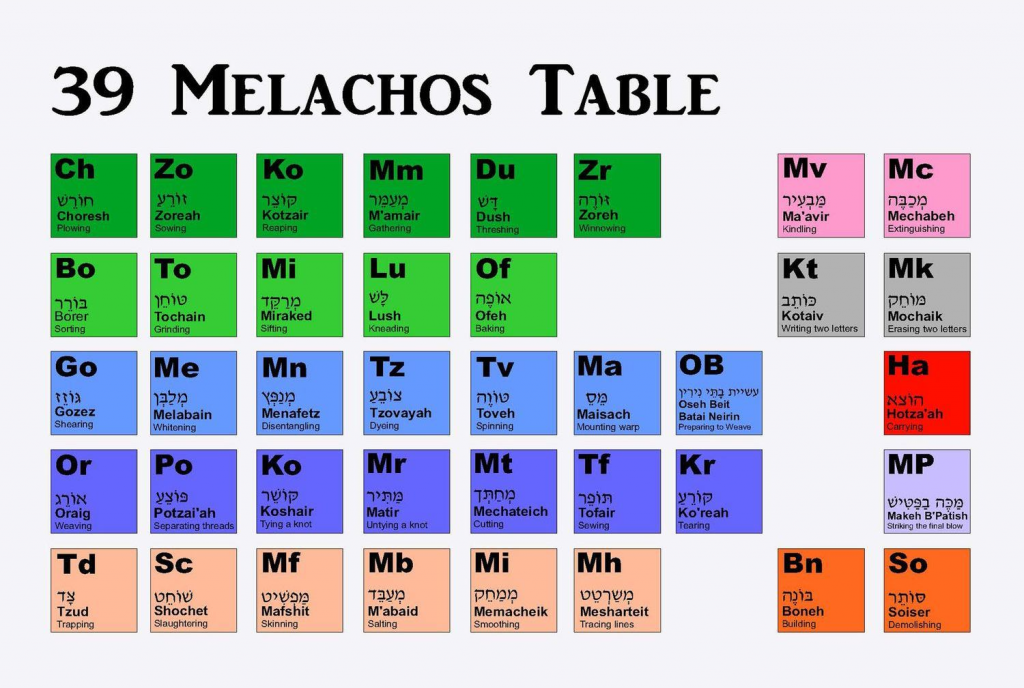
From a modern perspective, it may seem counterproductive. Instead of seven days to finish a project, Sabbath-observant Jews must complete it in six. Sometimes it feels like weekly house arrest: no driving, buying, cooking, cleaning or even participating in many basic human activities. Yet within these limits lies Shabbat’s beauty: a paradox of freedom through restriction.
Although Sabbath observance was habitually ingrained in me as I followed along with family and peers, I later realized it was something I needed. My resistance to rest, rooted in the belief that it wasted time, eventually turned into the realization that I don’t dislike relaxing—I just don’t know how to do it.
The day of rest allows surrender to something beyond the ego, entering a state of mindfulness. Rabbi Dr. Benjamin Epstein explores this in “Living in the Presence: A Jewish Mindfulness Guide for Everyday Life,” describing it through the concept of yishuv ha’daat, the act of settling into present awareness. Shabbat, he argues, is yishuv ha’daat realized, a shift from doing to being, or more precisely, to not doing. It is meant to be approached with an attitude that accepts and embraces the present moment as it is.
Shabbat offers the opportunity to foster community, as being “disconnected” from the outside world naturally draws people inward. In many observant neighborhoods, cars give way to people walking the streets; in most Israeli cities, buses halt their routes. More than 70 percent of Jewish Israelis, including those who are secular, have a traditional Friday night dinner with family and friends each week, according to Dan Senor and Saul Singer’s book “The Genius of Israel: The Surprising Resilience of a Divided Nation.” They argue that Friday night dinner is as foundational to Israel’s civil religion as the turkey on Thanksgiving and a barbecue on July Fourth are to America’s.
“יותר משעם ישראל שמר על השבת, השבת שמרה על עם ישראל“
“More than the Jewish People have kept Shabbat, Shabbat has kept the Jews.” – Ahad Ha’am
I wouldn’t be doing my job if I didn’t acknowledge one of the most profound thoughts on Shabbat written by Ahad Ha’am, an early 20th-century Hebrew essayist and the founder of cultural Zionism. This quote appears in virtually every article and reflection about the seventh day’s importance, and for good reason. Beyond the meaning itself, it is essential to note that Ha’am contended that culture has held people together throughout history, not necessarily religion; in this light, we must consider Shabbat as part of the cultural fabric of the Jewish people, not merely a Biblical obligation.
Micah Goodman, a leading philosopher in Israel, concurs.
“Communities do not create rituals; it’s more that rituals create communities,” he said. “And the simplest way to describe a community is a group of people that are witnessing each other’s lives, in the most supportive and non-instrumental ways.”
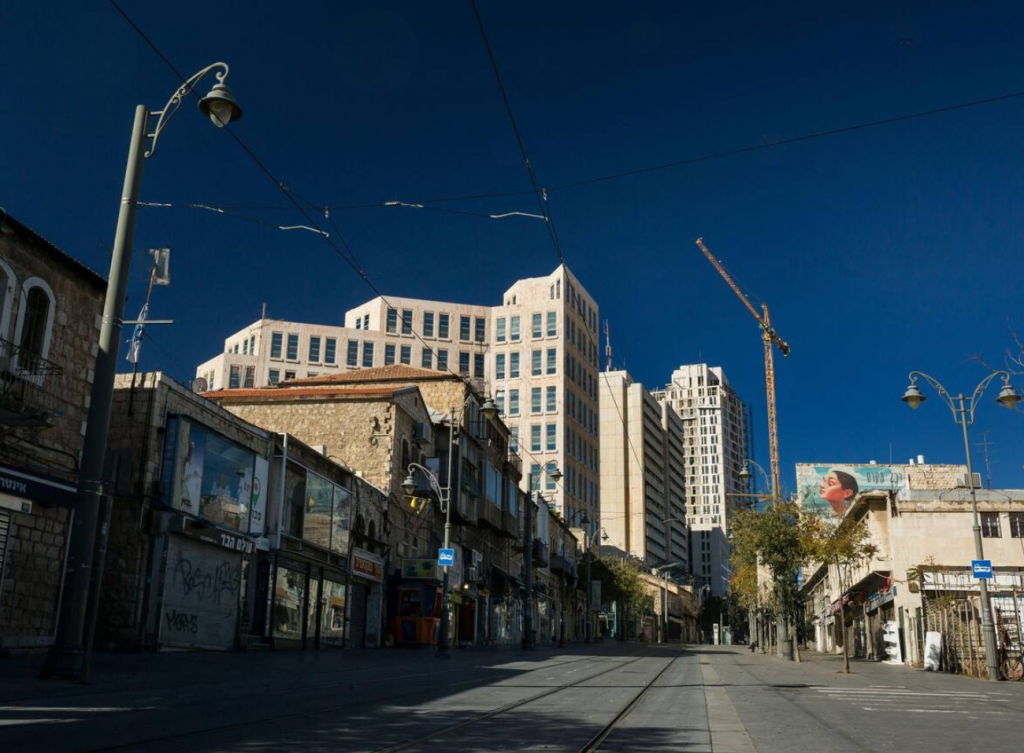
As my father always tells me, echoing the words of Ha’am and Goodman, this weekly tradition is why the Jewish community has persisted for centuries, withstanding assimilation and preserving its identity. In moments of destruction, when Jews were stripped of everything, like homes, names and belongings, the only possession left was memory itself.
Crypto-Jews, people who secretly practice Judaism while outwardly professing another faith to avoid persecution, epitomize this. Sofya Sara Esther Tamarkin recounts being fascinated by the memories her late grandmother, Zelda, would share about “strange” customs her family practiced around the time of the Russian Communist Revolution of 1917. The true resonance, however, was witnessing, alongside her grandmother’s Jewish-by-birth, Greek-Orthodox-practicing aide, her 80-year-old Soviet immigrant neighbor rediscovering her Jewish roots through the kiddush ceremony on Friday night, otherwise known as the blessing over the wine. In tears, the woman explained how the last time she heard those words was from her grandfather’s mouth.
“Even after eight decades of not participating in any Jewish prayers, this woman felt an undeniable connection to the blessing,” Tamarkin writes. “It was a testament to an eternal Jewish bond that transcends time.”
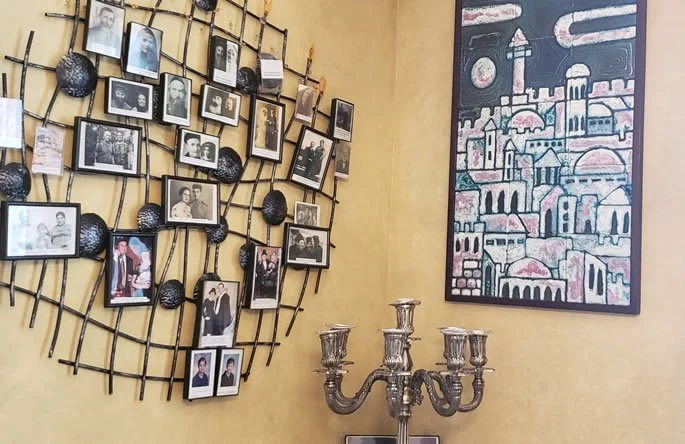
According to historian David M. Gitlitz, Sabbath observance is “the most persistent crypto-Jewish custom,” with Friday night candle lighting being “the most well-reported non-biblical crypto-Jewish practice,” as professors Shulamitch C. Halevy and Nachum Dershowitz note. These hidden rituals traveled far beyond the borders of Spain and Portugal during the late 14th- and 15th-century Inquisition, carried into the “New World” by those who fled in the 16th century. They have continued to appear generations later and continents apart, with the Holocaust being another primary example when concealed identity came abruptly, and often tragically, to light.
Olga Fin’s mother survived two concentration camps, Auschwitz and Bergen-Belsen. Weekly, Fin’s mother would mold margarine she saved into two candles, using the thread from her dress as candle wicks. She encouraged all women to do the same, lighting up the barracks every Friday night; she knew when it would fall out because she counted every day since she arrived (on the second day of Shavuot) to keep track.
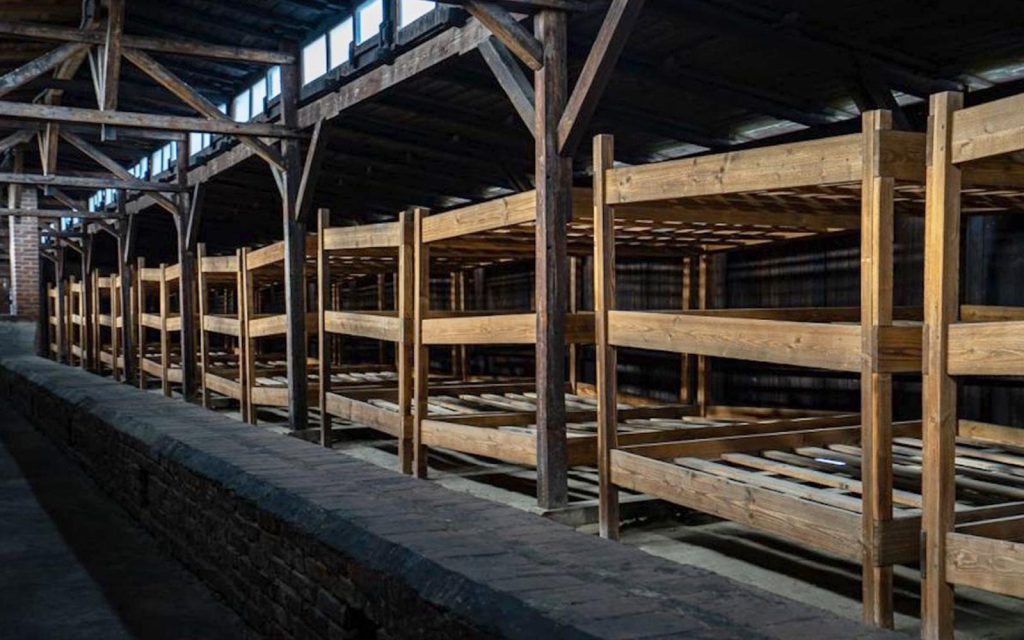
“She claimed that she survived due to her Shabbat candles,” Fin wrote.
(Side note: The light of the day of rest seems to be shining outside Jewish circles. German atheist Andreas Moser outlines on his blog his “secular Shabbat,” consisting of three facets: no internet, no work and spending the day in nature. I would have argued that without the religious and cultural ritual of Shabbat, there is nothing that differentiates my week from that of a secular man across the world, but I guess I was wrong.)
As Shabbat approaches each week, the rituals, songs and prayers remain the same, yet the people and the world that receive them do not. In Epstein’s terms, our meditations evolve as our inner state and circumstances shift. Participants can consciously step away from the chaos of life, bringing a different perspective to the same rituals. Just as the Jewish calendar goes round and round, typically with two dates from two years that never fall on the same day, our experiences in time build on what came before, but slightly off the same path.
This twofold collage concretizes this spiral. The left side carries collective memory—the weight of Jewish history and the moments that formed it, often more fixed. The right side carries the practice of honoring that memory through reflection, connection and ritual. Shabbat turns attention to the small movements that ripple across generations, urging a step out of the endless chase for achievement and into time lived as presence.

In my home, this means shutting down electronics and having leisurely conversation over a delicious meal (thanks, Mom), as opposed to the average night when we pile our plates high and scurry to opposite ends of the house to scarf down dinner in solitude (if you don’t count Netflix as company). Sometimes, it is the only time of the week when I can hear how my sister’s math exam went or share a recent revelation I had. It has become a ritual so ingrained in the fabric of my family that my dad makes a point of never spending a weekend away from home if he can avoid it, even if it means schlepping onto a 6 a.m. flight after a three-day conference.
Society teaches that time is a resource, often argued to be the most valuable one. Oliver Burkeman, in “Four Thousand Weeks: Time Management for Mortals,” counters this idea: time simply is, and how we choose to spend it defines our experience. As he writes, “Attention… just is life: your experience of being alive consists of nothing other than the sum of everything to which you pay attention.” Shabbat is a rehearsal for this kind of living: a time when attention, presence and memory converge, when we stop striving to improve or optimize, and instead embrace what is already whole.
As the sun dips below the horizon and my computer rests safely in its sleeve, I welcome Shabbat with flickering flames. Food is prepared, laundry is clean and, most importantly, my mind is at peace. Shabbat teaches that some of life’s greatest treasures are neither earned nor achieved: they are lived, remembered and returned to, again and again.
Molly Seghi is a rising fourth-year journalism student at the University of Florida and the editor-in-chief of “HaTanin Journal.” She always keeps a journal close at hand, filling it with ideas between long runs and kitchen experiments.