
By Adam Poupko
In international soccer games, the national anthem before the match stands as a moment of pride and unity for fans, viewers and citizens of the country. During Israel’s international games, as Hatikvah plays, the camera pans across the line of players representing the country in blue and white. Given the criticism Israel often faces on the international stage, the moment carries particular weight, offering its players an opportunity to express national unity and pride to the world.
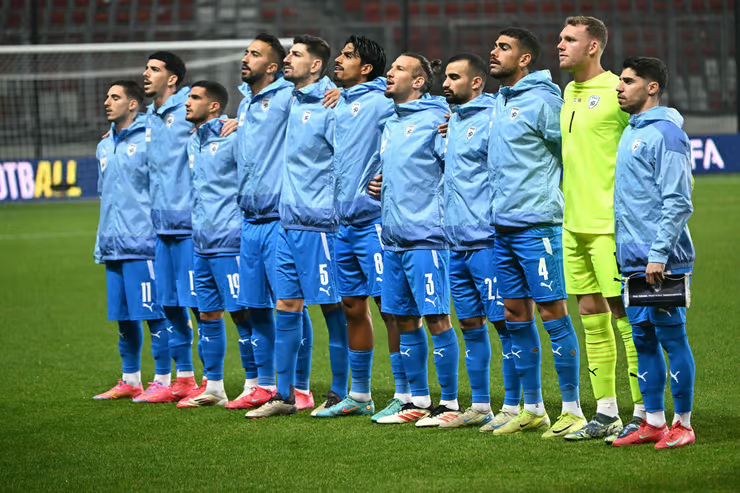
For decades, Arab-Israeli players have fulfilled vital roles in the national team’s tactical lineups. After all, Israel is not 100% Jewish; the Arab sector makes up about 20% of the population. While the Israeli national anthem plays during these international games and the camera lingers on the Arab players, a heavy silence is felt.
Although Arabs are part of the national team, their participation often conflicts with their religious beliefs and political views due to several state symbols. As the line “Nefesh Yehudi,” which translates to “the soul of the Jewish people,” is sung, the Arab players are, in essence, excluded. In 2016, while speaking at an anti-racism conference, Arab-Israeli soccer player Abbas Suan shared that he doesn’t feel compelled to sing the anthem. Another, more overt, example of marginalization is the Star of David on the national flag, which may be seen as contradicting their religious beliefs.
Several prominent non-Jewish athletes have become symbols of the tension between athletic representation and national identity. Over the years, Israel’s national team has included many non-Jewish players such as Beram Kayal, a standout midfielder in the 2010s who now works to promote soccer in the Arab sector. Another key figure is Munas Dabbur, a prolific scorer for the national team who retired from international play in 2022. Dabbur’s departure followed intense booing from fans after a controversial social media post he made during the 2021 Arab-Israeli unrest.
During the 2018 international season, Bibras Natcho, born to a Circassian Israeli Muslim family, became the first non-Jewish captain of the national team. Natcho, throughout his career, refrained from singing Hatikvah, prompting debate over whether a player should serve as captain if they do not sing the national anthem. Among the Israeli media, former player Eyal Berkovic led the narrative against Natcho’s promotion, stating that the national team captain must sing the anthem.
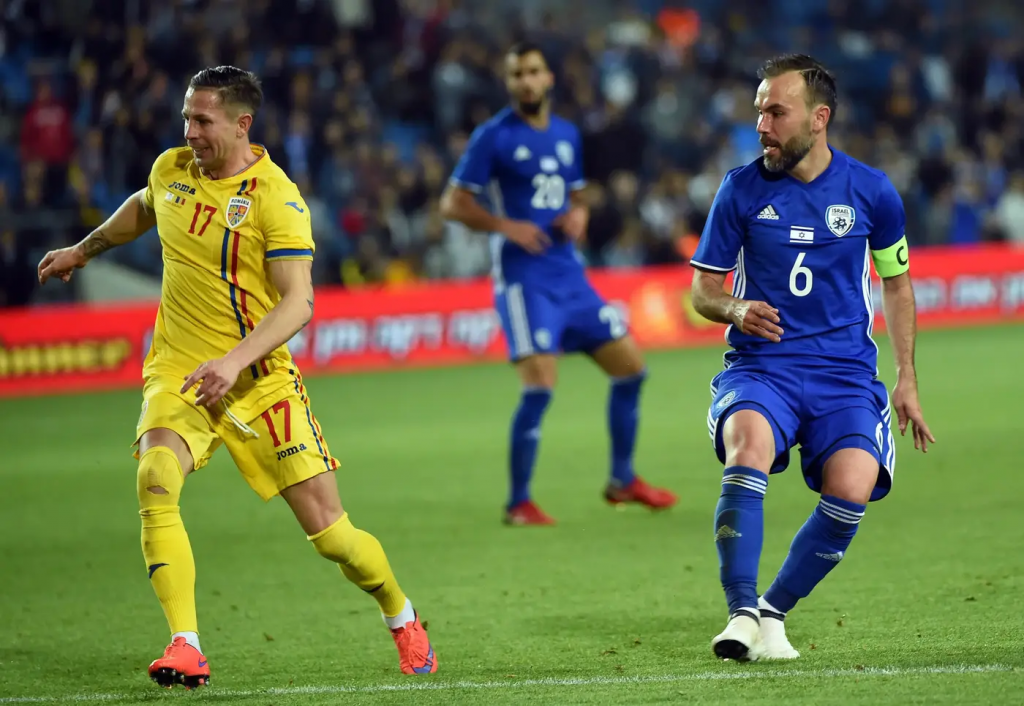
Over the years, Arab-Israeli players have been vital to the national team, scoring in pivotal moments and fulfilling key tactical roles, even as many criticize their participation. With these intensive emotions surrounding their participation in both international play and the Israeli Premier League, the field becomes more than just a place of play; it serves as a stage where non-Jewish players must navigate a constant battle of identity.
Having this tension around the national anthem for years has reflected the heart of the dynamic between Jewish and Arab-Israeli players. The ability to represent Israel remains a profound paradox for Arab-Israeli athletes. At the same time, the team provides a platform for professional excellence, but it also heightens the complexities of their national identity.
Soccer in Israel has become, over the years, a place for integration of Arabs in Israeli society and a stage for conflict, according to Dr. Raanan Rein, a history professor at the Bud Shorstein Center for Jewish Studies at the University of Florida.
“It is a complex space that has simultaneously facilitated the integration of Palestinian-Israelis into Israeli society and has also served as a stage for conflict, prejudice and the expression of distinct, sometimes conflicting, identities,” Rein said.
This struggle for representation begins at the grassroots level. Arab-Israeli families work hard to develop national-level talent despite a Knesset Research and Information Center report showing sports facility availability is 38% lower in the Arab sector than in the Jewish sector.
The fight to find belonging, development and resources does not end with the national team; it spills over into the fierce rivalries of Israel’s domestic league. The most notable of these is the annual “volcanic” clash between Beitar Jerusalem Football Club and Arab-led clubs such as Bnei Sakhnin.
Beitar remains a club with historical roots in Zionism, featuring the menorah on its crest as a symbol of Jewish national pride and devotion to the capital. For many fans, the club is a pillar of their Jewish identity. On the other hand, Bnei Sakhnin represents more than just a city in the Galilee; it serves as a platform for the Arab sector, a rare space where Arab-Israeli identity is displayed with unapologetic visibility.
Fans in the Israeli Premier League feel more than a spirit of competition; the atmosphere in the stands crackles with the friction of two competing histories. As the chants turn into confrontations, they reveal a harsh reality: the game serves as a proxy for a much larger societal clash. Every physical altercation and goal scored serves as a visceral reminder that for 90 minutes, the stadium remains the most volatile map of the region’s soul.
The camaraderie felt among the national team is often so fragile that it evaporates the moment players return to their clubs. Rivalries exist throughout the league, but nothing matches the intensity of the games between Beitar Jerusalem and Bnei Sakhnin.
Matches between these teams are defined by high intensity and, at times, violence. Chants and banners from both fan bases become weapons in a narrative struggle. These have included racist chants and banners targeting Arab Muslims, such as calls for villages to burn or demands for “purity” within the Beitar organization, a reference to a history of not hiring Arab players. Conversely, banners reflecting Palestinian narratives are often displayed by Sakhnin supporters.
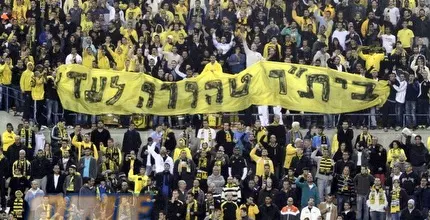
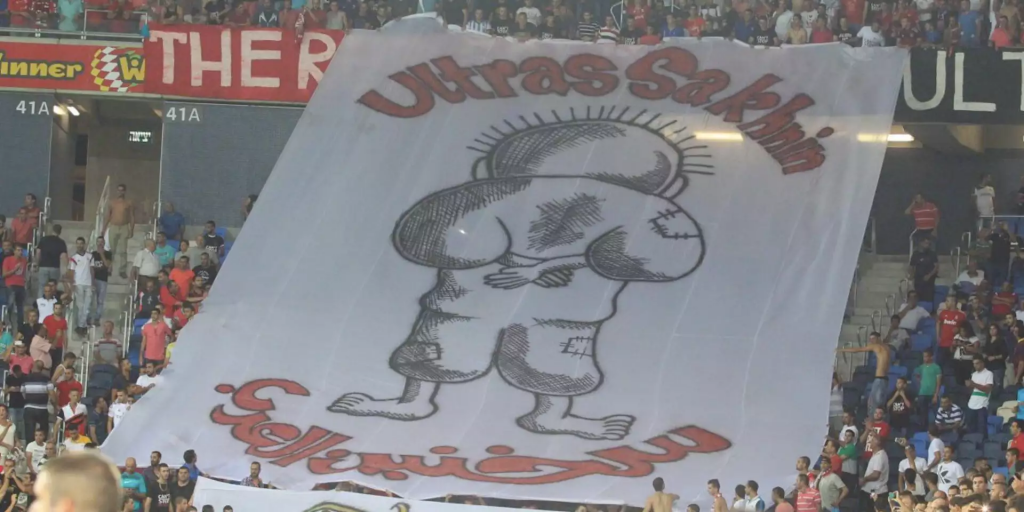
These matches do not rely solely on standings; they are about communal honor and the right to claim space in Israel’s national story.
This duality of the Israeli soccer league, which features different communities contributing and fighting over multiple principles, presents a great burden on the nation’s narrative. Although the conflicts in soccer may be many, the sport makes a significant contribution to the region itself.
Israel’s soccer presents a significant laboratory for multiculturalism that often turns out to be messy and loud, but at the end of the day, undeniably real. Israeli soccer league society may include arguments about singing a national anthem, but it includes an increasing willingness to share the same grass on the pitch. A potential for unity isn’t found through the conflicting identities on the field, but rather in the professional labor of the game. As long as the ball stays in play, the conversation between communities will still be alive, giving hope for the region’s future.
Adam Poupko is a rising fourth-year journalism student at the University of Florida and an Undergraduate Assistant at the Bud Shorstein Center for Jewish Studies. He is a huge sports fanatic obsessed with basketball and the San Antonio Spurs, who is looking to make a name for himself in the sports writing industry as a Texan-Israeli.